Railroads move through thousands of communities every day. For most people, trains are simply part of the background. They pass by homes, schools, businesses, and road crossings so often that the sound of steel wheels on rail fades into everyday noise.
But sometimes something sounds different.
Occasionally, a resident hears a grinding noise from a passing train. Someone notices sparks beneath a railcar. A crossing gate begins malfunctioning. A signal light behaves in a way that does not seem right.
When those moments are reported, disasters can be prevented.
Rail safety is built on layers. Signal Maintainers inspect infrastructure. Train crews monitor their equipment. Track Inspectors patrol the right-of-way. Automated detectors monitor wheel bearings and other components. Federal safety regulations require inspections and reporting to catch problems early.
But another important layer exists outside the railroad itself: the communities trains run through.
People who live near the tracks often notice when something unusual happens. A strange noise, smoke from a wheel, or equipment dragging beneath a railcar can signal a mechanical problem that could lead to a derailment if left unchecked. In many cases, early reports from the public allow railroads or emergency responders to investigate and stop a train before a situation becomes dangerous.
The derailment in East Palestine, Ohio, showed how mechanical failures develop over time. A wheel bearing overheated before ultimately failing. Problems like that do not appear instantly. They progress. Early warning signs existed long before the catastrophic event occurred.
That is why awareness matters.
Residents do not need technical knowledge to recognize that something seems wrong. Simple observations can make a difference.
Things that may indicate a problem include:
- Sparks or flames coming from beneath a railcar
- Smoke from a wheel or axle
- Loud, repetitive banging sounds from a passing train
- Metal dragging along the track
- Crossing signals or gates malfunctioning
- Railcars leaning unusually or shifting excessively
If something appears unsafe, it should be reported. Every railroad crossing in the United States currently has a blue Emergency Notification System sign that lists a phone number and crossing identification number. Calling that number connects directly to the railroad so crews can be alerted immediately. Local emergency services can also relay reports to the railroad.
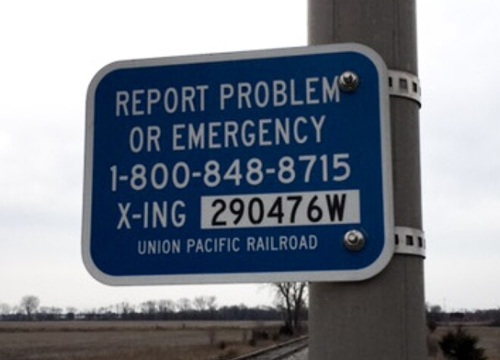
No one should approach the tracks or attempt to investigate on their own. The safest action is simply to report what was seen or heard.
Communities, railroad workers, and regulators all share the same goal: preventing accidents before they happen.
Most people will never realize when a derailment was avoided because someone spoke up. A train may simply stop for an inspection. Crews may quietly correct the issue. The moment passes without headlines.
But those moments matter.
Rail safety is strongest when everyone along the line pays attention. When something does not look or sound right, reporting it could prevent a tragedy.
###